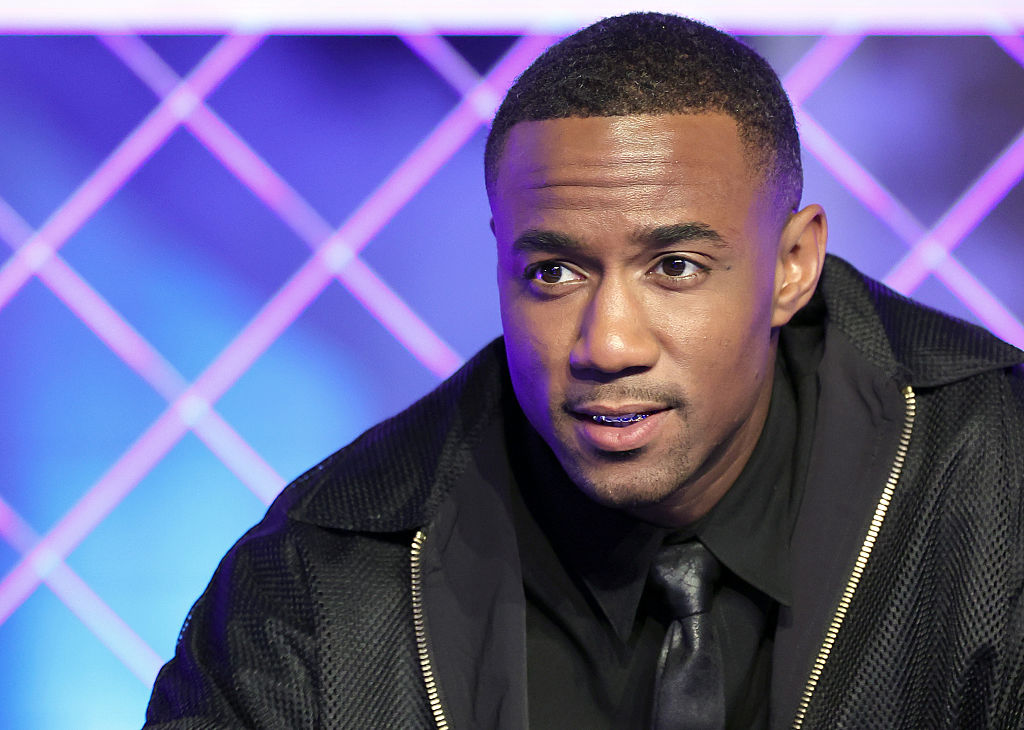
Here went the A-Train.
After his character’s devastating demise on season five of The Boys, Jessie T. Usher is reflecting on the super speedster’s sendoff, a shocking start to the show’s final chapter that continues to make it clear that no one, especially not a supe, is safe.
The series kicked off its final season with a brutal blow, killing off A-Train, the fastest man alive, in the premiere’s final moments. The “fastest man alive” met a merciless end at the hands of Homelander, played by Antony Starr, after swerving to avoid hitting an innocent bystander.
The split-second decision served as a stark callback to the show’s pilot, when A-Train fatally ran through Hughie’s girlfriend, a moment that first cemented his careless cruelty.
This time, however, the choice signaled something else entirely: conscience, something Jessie T. Usher said was new for the character and made A-Train’s evolution so rich.
“This is the first time I’ve played a character that started out believing one thing and then completely changed his mind and heart,” he told BOSSIP. “Those little light bulb moments, I’m going to miss that.”
Across five seasons, A-Train’s arc shifted from villainy to vulnerability, especially in his final moments.
“Sometimes the character across from me says something, and it affects me in a way that it hasn’t before,” Usher added. “You just learn stuff about this character while you’re playing him.”
That sense of discovery carried into his final faceoff with Homelander, including one of the episode’s most unexpected beats: A-Train laughing in the face of death. Just before the sociopathic leader of The Seven snapped his neck, A-Train delivered a final, defiant takedown, calling Homelander a “pathetic, weak, sniveling f***g loser” and “an empty f****g suit,” as he cackled in his face.
The laughing moment, Usher revealed, was not scripted but instead emerged organically after hours of filming.
“It wasn’t intentional,” he told BOSSIP, explaining that after hours of filming alongside Antony Starr, the actors began experimenting once the technical elements were locked. “We had every conversation we could possibly have about the scene. Then you just start trying stuff.”
What followed was a deeper dive into what A-Train wanted to leave behind in his final moments.
“Anthony came up to me, and we talked about what A-Train wants to leave him with, what a win looks like for him,” Usher recalled. “This is his final moment, and he spent so much time feeling one way about Homelander. Now he doesn’t have to run. So how does he really feel?”
As they pushed beyond the scripted lines, the absurdity of the situation began to surface.
“One thing that came up that wasn’t in the words was how ridiculous this whole situation has been,” Usher said. “Like how have we let this person control our lives this whole time? He’s wearing tights.”
That realization, paired with everything A-Train knows about Homelander behind the facade, shifted the energy entirely, and A-Train went from fear to fearless defiance.
“It just started to become funny,” he told BOSSIP. “And I’m laughing in front of Antony, and he’s so locked into his character I can see him getting angry. It reminded me of messing with my sister, like I know I’m about to get in trouble, but I got you. That’s when you win.”
The moment, he added, took on multiple forms during filming, ranging from laughter to tears, as both actors played with what was not written on the page.
“It was really just a back and forth of communicating what’s not in the words,” he said. “I loved it.”
That layered dynamic carries into episode two, where A-Train is laid to rest, and Homelander delivers a warped reflection on their relationship, insisting he “loved” his fellow member of The Seven. Usher believes that sentiment, however twisted, is genuine in Homelander’s psychopathic mind.
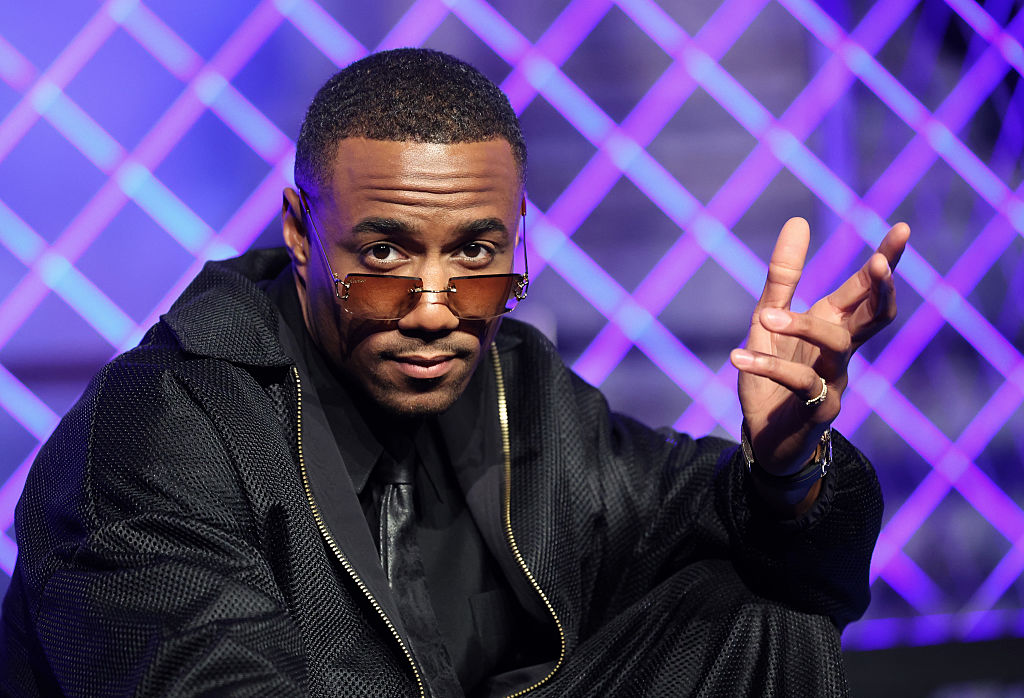
“I genuinely think he believes that,” Usher said. “To some degree he feels like we had a thing and he was doing the right thing.”
“We all have that one friend that’s terrible, but to them it’s like, ‘I was just pushing you to be great,’” he continued. “It’s like, no, you pushed me off the edge. It’s not the same thing.”
While A-Train’s arc ultimately bends toward redemption, Usher is clear-eyed about the character’s past and the weight of his actions.
“I didn’t necessarily feel like I wanted him to go out as a hero,” he told BOSSIP when asked if he wanted A-Train to have a path to atonement. “But I always felt like him going out was deserved. He’s done a lot. He’s done some things.”
That tension between accountability and growth defines A-Train’s final chapter. His last act, protecting his family from Homelander, underscores a late but meaningful shift, even if it comes at the ultimate cost.
But what if that cost hasn’t been fully paid? Fans are theorizing that the character Marie Moreau from the spinoff series Gen V could use her blood manipulation powers and bring A-Train back to life.
Usher, however, is keeping things coy.
“There’s a lot of great theories out there,” he told BOSSIP. “We’ll see what comes together.”
For now, A-Train’s story ends where it began, with a split-second decision and a devastating consequence, only this time, the man once known for running from responsibility finally stood still and faced it.
Rest in rapid peace, for now, A-Train.