In the early days of YouTube, before sophisticated algorithms, monetization guidelines, and rigorous content moderation policies reshaped the digital landscape, the internet existed as a modern Wild West. Among the standard uploads of family videos, low-resolution comedy skits, and video game walkthroughs lay a dark underbelly of “lost media”—raw, unedited, and highly disturbing footage that blurred the boundaries between consensual martial arts sparring and outright criminal assault. Among these historical digital artifacts, none remains quite as haunting or widely misunderstood as the infamous “Kung Fu Guy” dojo incident. What began as an eccentric stranger’s polite request to demonstrate his spiritual martial arts quickly spiraled into a savage, life-threatening beating, captured in cold, unblinking detail on camera.
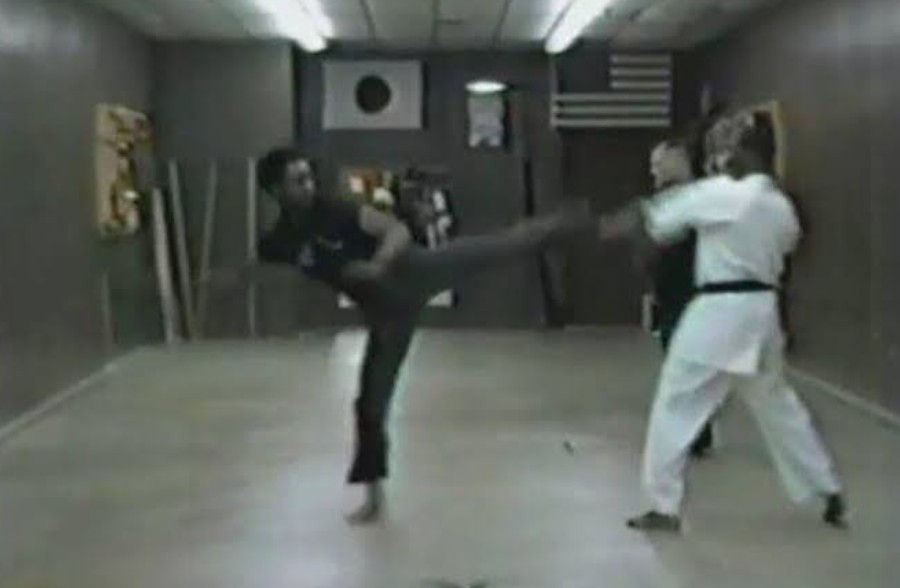
For years, this footage has circulated through shock sites, martial arts forums, and true-crime subreddits, sparking intense debate, horror, and profound confusion. While the video achieved immense notoriety due to its graphic and sudden escalation of violence, a closer examination of the narrative, the setting, and the actual players involved reveals a much darker reality. It is a story not of a master defending his school’s honor, but rather a chilling web of exploitation, misidentified aggressors, bystander apathy, and a shocking, total failure of law enforcement accountability.
A Delusion of Grandeur Meets a Cynical Trap and Video
The events unfolded in the cold winter month of December, inside a local martial arts dojo. A man, who would subsequently be immortalized on the internet simply as the “Kung Fu Guy,” walked into the facility. From a psychological perspective, his initial behavior presented a striking contradiction. He openly claimed to have been taught martial arts directly by Jesus Christ—an assertion that strongly points to active delusions or a severe, underlying mental health struggle. Yet, witnesses and viewers alike have noted that he was remarkably well-presented, polite, and articulate. While inside the building, he exhibited none of the frantic or erratic behaviors typically associated with active psychosis. Instead, he approached the dojo staff with quiet confidence and respect.
Bobby Joe Blythe Video
He presented a simple, seemingly harmless proposal: he wished to demonstrate his defensive and offensive capabilities “around” one of the dojo’s pupils. He went to great lengths to explicitly clarify his intentions, stressing multiple times that he had no desire to touch, injure, or cause any physical harm to the student. Under normal, professional martial arts standards, such an eccentric request from an untrained, potentially unstable individual would be immediately defused and turned away. However, the leadership of this specific dojo did not operate under standard ethical guidelines. Rather than prioritizing safety or de-escalating the situation, the dojo’s owner and chief instructor, known in the community by the initials “BJB,” saw an opportunity. BJB gave his official blessing, effectively setting a trap and authorizing a mismatched confrontation that should never have been allowed to occur.
The Escalation: From Controlled Sparring to Savage Assault
With BJB’s permission secured, the demonstration began, but any pretense of a controlled, non-contact exhibition vanished almost instantly. The “Kung Fu Guy” was matched against an imposing opponent. As the two began to move, the encounter rapidly devolved into a live, chaotic sparring match. Blows began landing on both sides. The visitor, driven by his eccentric beliefs, attempted to apply his unstructured techniques, while his opponent responded with increasingly aggressive, trained combat maneuvers. Despite the visitor’s initial peaceful declarations, the environment in the room turned hostile as the physical intensity escalated.

The physical altercation reached a devastating climax not because of a competitive exchange, but due to a sudden, highly disproportionate surge of physical malice. The dojo’s fighter decided he had tolerated enough of the exchange. Seizing the visitor, he roughly and violently shoved him backward into a solid metal support pole. The impact was severe; the “Kung Fu Guy” collapsed instantly to the floor, completely incapacitated and defenseless. What followed was no longer a martial arts match, but a brutal, one-sided assault. The attacker stood over the fallen, unconscious man and began stomping on his head—repeatedly, with crushing force. He did not stop until blood began to pool on the floor, ignoring the obvious and catastrophic threat to the victim’s life.
Setting the Record Straight: Clarifying the Identities
To fully understand the tragedy of this video, one must dissect the widespread misconceptions that have plagued its online legacy for over a decade. In early forum discussions and viral reposts, viewers frequently misidentified the roles of those present. A common narrative erroneously asserted that BJB—the prominent figure associated with the dojo—was the physical attacker who carried out the brutal head-stamping. This is factually incorrect. BJB was the heavily built owner of the business; he was the mastermind who set up the fight, permitted the violence to escalate, and ultimately orchestrated the cover-up. He did not physically participate in the combat himself.
The actual physical aggressor—the man who executed the near-fatal beating—was a Black male who was a student at the dojo. Far from being an untrained ruffian, this individual possessed a formidable background as a United States Marine, and some local reports even suggested he may have worked in law enforcement. This background makes his actions infinitely more condemnable. Trained in lethal hand-to-hand combat and bound by professional standards of restraint, he chose to unleash maximum, lethal force against a clearly incapacitated, mentally fragile civilian. The narrative of “defending the dojo’s honor” falls entirely flat when confronted with the raw footage of a trained military veteran repeatedly stomping on the skull of a man knocked cold by a steel pillar.
The Chilling Aftermath and Cynical Cover-Up
The horror of the incident did not conclude when the physical attack ended. As the attacker finally relented—having been half-heartedly talked down from his mindless, bloodthirsty rage by a few onlookers—the immediate priority of the dojo staff was not medical assistance, but concealment. Rather than calling emergency services or administering first aid to a man who had just suffered severe, potentially fatal traumatic brain injury, BJB ordered his students to drag the victim “out back” into the alleyway. They complied without hesitation, dragging the limp, bleeding body across the floor, leaving a distinct, thin trail of dark blood in their wake.
In a display of staggering hubris and sociopathy, BJB then used his camera to record the physical evidence of their crime. He filmed the trail of blood leading across the dojo floor and pointed the lens toward the back door where the unconscious victim had been discarded like refuse. Rather than burying this incriminating footage, BJB uploaded the entire, unedited sequence to his public YouTube channel. It remained hosted on the platform for a considerable period of time, serving as a bizarre, self-published trophy of the dojo’s “dominance.” It was only when community backlash, legal scrutiny, and the decline of his business forced his hand that BJB closed the dojo, deleted the channel, and abruptly packed up and relocated to another region to escape accountability.
The Lingering Mystery and a Profound Failure of Justice
Decades later, the ultimate fate of the “Kung Fu Guy” remains one of the internet’s most unsettling mysteries. To this day, the true identity of the victim has never been publicly established. He walked out of the shadows of his own mental illness into a brutal trap, and then vanished back into anonymity. The handling of the case by local authorities represents a profound, systemic failure of basic police procedure. When public outcry eventually forced law enforcement to look into the footage, a responding police officer claimed to have located and spoken to the victim. The officer briefly reported that the man “was okay” and did not want to press charges. Shockingly, the officer neglected to record the victim’s name, secure his contact information, or document his physical condition, effectively closing the case with zero paperwork and zero justice for a victim who may have been coerced or too traumatized to speak.
The “Kung Fu Guy” dojo video stands as a grim monument to human cruelty and the dark side of early viral internet culture. It strips away the romanticized myths of martial arts discipline, exposing a reality where a vulnerable, mentally ill man was exploited for amusement, savagely beaten by a trained professional, and thrown into an alley like trash. As the principal actors slipped away into obscurity and law enforcement turned a blind eye, the video remains a chilling reminder of how easily the defenseless can be crushed, and how easily a crowd can stand by and watch.